Designing a Garden that supports your energy
When I first started gardening, I planted the way most people are taught to plant.
In rows.
Long, neat, tidy rows.
The rows were organized, the spacing was technically correct, and the garden produced vegetables. In many ways, it worked exactly the way it was supposed to. But even though it was productive, something about it never felt quite right.
The space felt rigid. The soil was exposed. The plants seemed isolated from one another rather than part of something larger.
Then one season I started experimenting. I stopped forcing my plants into straight agricultural rows and began planting the way nature grows — in layers, in clusters, in combinations where plants support one another.
And that was the moment everything changed.
The garden suddenly became more alive. Colors and textures filled the beds. Pollinators began visiting constantly. Plants shaded the soil, protected each other, and seemed to thrive in a way they never had before.
What surprised me most was that the garden didn’t just grow better. It felt better too.Because the garden wasn’t fighting against nature anymore. It was partnering with it.And when your garden works with nature, it starts supporting your energy instead of draining it.
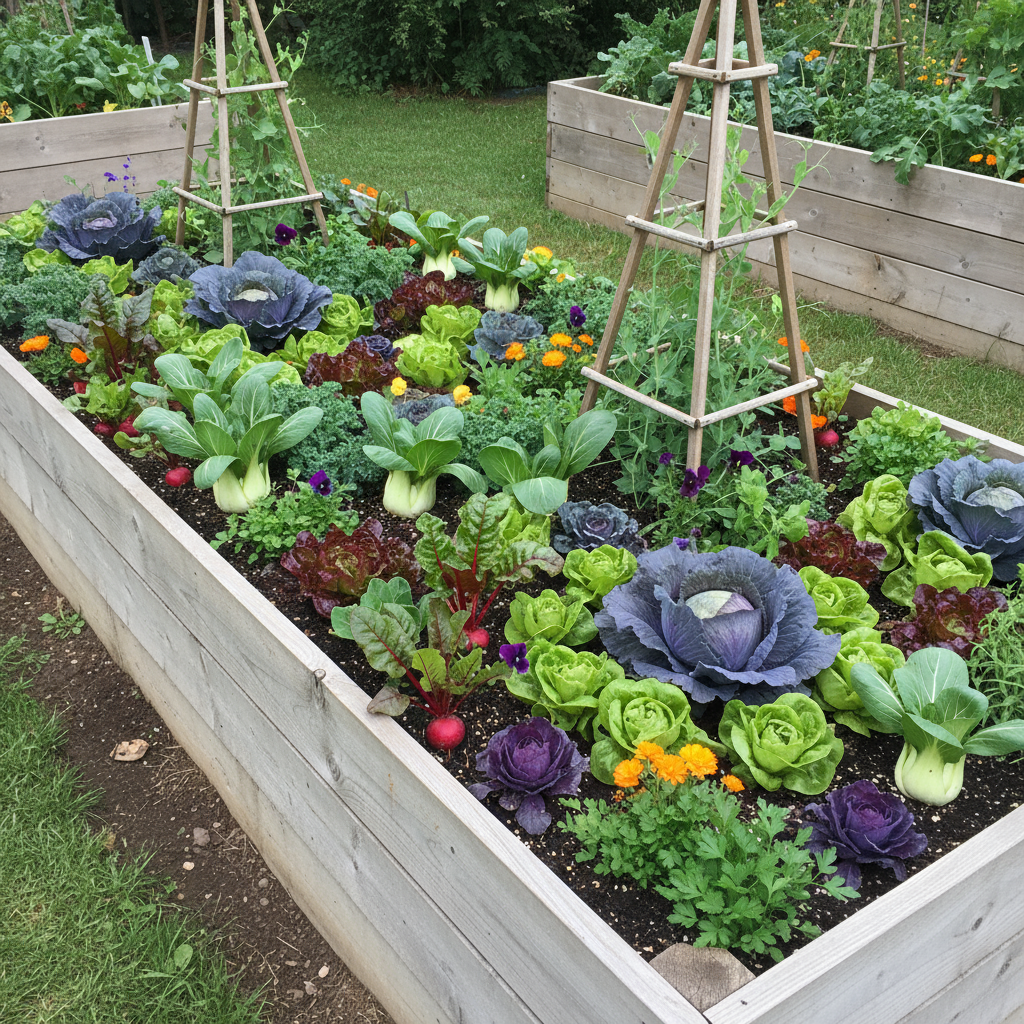
The Difference Between Growing Food and Designing a Garden
Traditional row gardening comes from large-scale farming systems where machinery needs straight lines to move efficiently across fields. Rows make sense when tractors are involved, but most of us are growing food in backyard gardens and raised beds where space is precious and every square foot matters.
In a small garden, rows often leave a surprising amount of empty soil exposed between plants. That open soil dries out faster, invites weeds to grow, and forces gardeners to constantly intervene.
Nature doesn’t grow this way.
Plants grow in communities. They layer together. Taller plants provide shade while smaller plants protect the soil. Flowers attract pollinators and beneficial insects. Herbs release aromas that deter pests.
When we begin designing our gardens to mimic these natural relationships, the space transforms from a collection of individual plants into a living ecosystem.
And ecosystems are far more resilient than isolated plants.
The soil stays cooler. Moisture is retained longer. Pollinators feel welcome. Beneficial insects move in and begin doing some of the work for us.Instead of constantly managing the garden, we begin guiding it.
Intensive Planting Changes Everything
I love intensive planting! It makes my work in the garden easier and I have more time to relax in my garden and play with my littles, than constantly having to work in it. And I get more food grown in a box than I ever did before. One of the most empowering (an overwhelming) realizations gardeners have is that they can grow far more food in a raised bed than they ever expected by using intensive planting.
Instead of spacing plants in long rows, intensive planting allows us to thoughtfully place crops closer together so they fill the bed in a balanced way. The goal isn’t overcrowding; the goal is using the space efficiently so that plants support one another while still having room to grow.
When plants grow closely together, their leaves create natural shade across the soil surface. This shade protects soil microbes, reduces evaporation, and keeps moisture levels more stable.
And visually, the garden becomes something entirely different. Instead of bare earth and separated rows, the beds begin to look lush and abundant. The textures of leaves overlap. Colors blend together. Flowers move between vegetables.
The space feels full of life
But intensive planting works best when spacing is intentional. This is where square-foot-style spacing becomes a powerful tool.The square foot gardening method by Mel Bartholomew has calculated spacing based on how many plants comfortably fit within a square foot. Small plants like lettuce, radishes, or scallions can grow up to sixteen per square foot. Medium plants like spinach or beets often grow nine per square foot. Larger crops like broccoli or kale may need four plants per square foot, while very large plants such as cabbage or sage may take a full square foot on their own.
When you combine these spacing guidelines with natural planting patterns, you create gardens that are incredibly productive without ever feeling crowded. And that’s exactly what I do!
Companion Planting Creates Balance
But since we all know I’m an overachiever at this point, I add another layer of garden design that makes an enormous difference to garden success. Companion planting.
Companion planting looks at how different plants interact with each other and how those relationships influence the overall health of the garden.Some plants attract beneficial insects that help control pests. Others improve soil health by supporting microbial activity below the surface. Flowers bring pollinators into the space, which benefits both vegetable crops and the broader ecosystem.
For example, herbs like dill and parsley are magnets for beneficial insects that prey on aphids and other common pests. Flowers such as calendula and coneflower attract pollinators while adding color and softness to the beds. Leafy greens can fill empty spaces between larger plants, protecting the soil while also providing additional harvests.
When these relationships are considered during the design process, the garden begins functioning more like a balanced ecosystem than a collection of separate crops.
And balanced ecosystems require far less intervention from the gardener. And that is exactly what I’m looking for! Let work but larger return.
When the Garden Gives Energy Back
There is another benefit to designing gardens this way that people rarely talk about.
It feels good.
A well-designed garden invites you to spend time in it. The space feels alive and welcoming. Bees move between flowers, leaves brush against one another in the breeze, and every corner holds something interesting to observe.
Instead of feeling like work waiting to be done, the garden becomes a place of calm and creativity.
You linger longer. You harvest more often. You notice small changes in the plants and soil.
And over time, the garden becomes something more than a place where vegetables grow.
It becomes a place that supports you too.
Let Me Design the Garden for You
One of the biggest challenges gardeners face is figuring out how to put all of these pieces together.
What grows well together?
How close should everything be planted?
Where should flowers go?
How do you maximize space without overwhelming the plants?
Garden design can quickly feel complicated.
That’s why I’ve created a new collection of pre-designed garden planting plans that take all of these principles into account.
These designs use intensive planting methods, companion planting relationships, and natural layering to create raised beds that are productive, beautiful, and easy to manage.
They are designed so that every plant has a purpose, every square foot is used thoughtfully, and the garden works with nature instead of against it.
If you’ve ever wished someone could simply hand you a plan and say, “Here’s exactly what to plant and where,” this is for you.
And if your space or family’s needs are unique, we can design a completely custom garden plan specifically for your beds.
Because sometimes the best way to support your energy in the garden is to let someone else handle the design.