Watering Smarter in Summer Heat
She was doing everything right.
At least, that's what it looked like from the outside. Every afternoon around three o'clock, she'd head out to her raised beds with her watering can, give everything a good drink, and feel that quiet satisfaction of having taken care of her garden. She was consistent. She was attentive. She was devoted.
She was also, unknowingly, making things harder for her plants with every single watering.
When she mentioned it during one of our coaching sessions, I didn't have the heart to tell her immediately. I asked a few questions first. What time of day was she watering? Afternoon, she said — it was just part of her routine. How long was she watering? Until it looked wet on top. Was she noticing any issues? Well, yes, actually. The plants seemed stressed even though she was watering every day. Some leaves looked a little scorched. A few plants weren't thriving the way she'd expected.
And there it was.
Here's the thing about watering in summer: it's not just about how much water you give your plants. It's about when, how, and where that water lands. And in a Northern Virginia summer — where afternoon temperatures routinely climb into the 90s and the humidity makes everything feel like a sauna — getting those details right makes all the difference between a garden that thrives and one that just barely survives.
So let's talk about watering smarter.
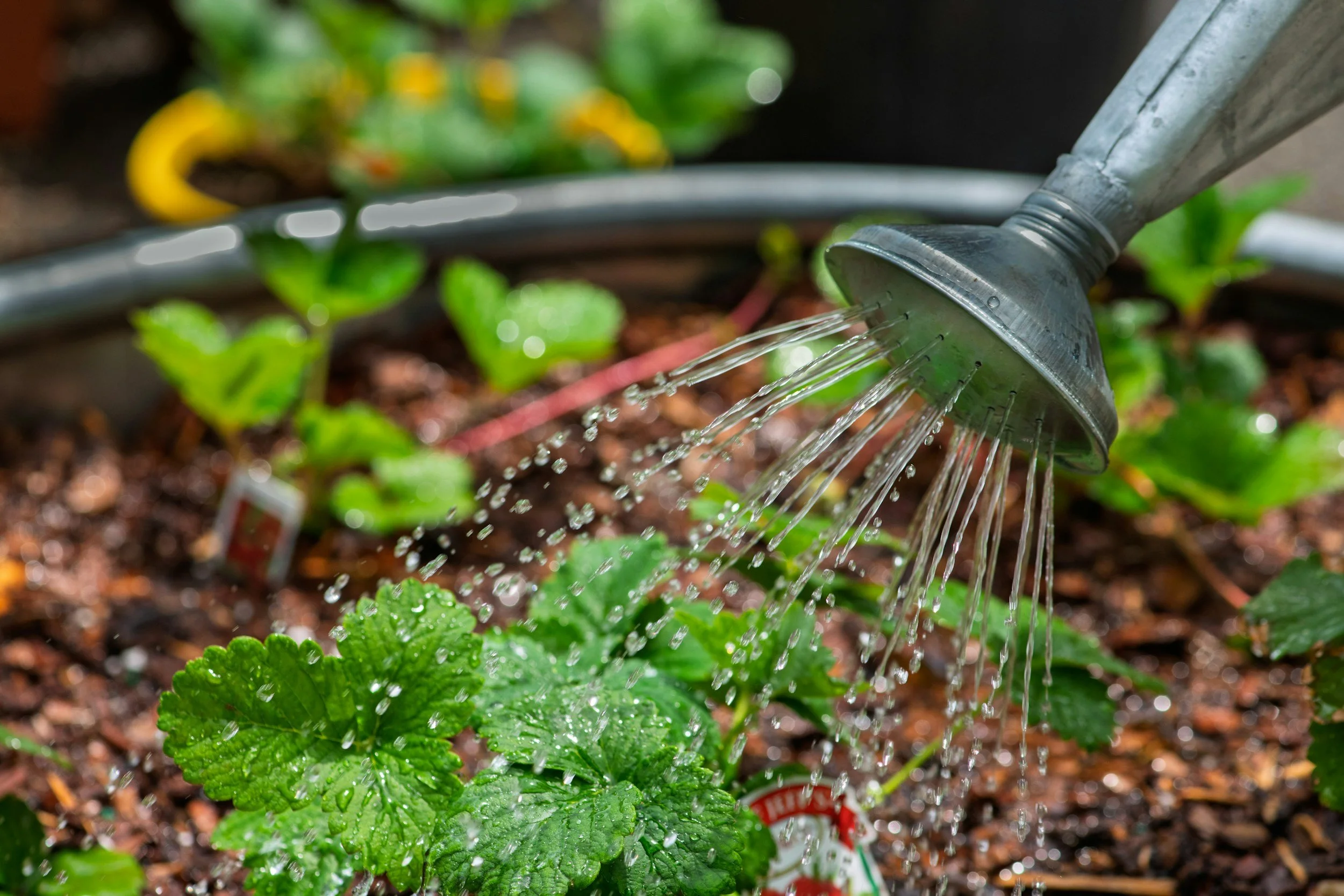
Ditch the Afternoon Watering Habit
I know. It's convenient. It fits your schedule. But afternoon watering — especially in full summer sun — is one of the most common and costly mistakes a gardener can make.
Here's why: when you water in the afternoon heat, a significant portion of that water evaporates before it ever reaches the root zone. The sun is at its strongest, the air temperature is at its peak, and the soil surface acts almost like a frying pan. You're working hard, using water, and your plants are getting far less of it than you think.
There's also the issue of foliage. When water lands on leaves in the afternoon sun, it can cause scorching — those brown, papery patches that look like something burned the leaf from above. This is especially common on plants like squash, cucumbers, and beans. You’ve got to water at the base of the plant. Some of my clients like to “set it and forget it” with a sprinkler or irrigation system that sprays and that’s the best way to get disease!
The fix is simple: water in the early morning or golden hour in the evening. Ideally between 6am and 9am, before the heat of the day builds. Morning watering gives moisture time to soak down to the root zone before evaporation kicks in, keeps foliage dry through the hottest part of the day, and sets your plants up with the hydration they need to face the afternoon heat.
I actually prefer early evening, it’s starting to cool, golden hour has taken over and your plants look divine. It gives me extra inspiration to check under those leaves for eggs. Just make sure you're watering at the base of the plant, not over the foliage, so leaves dry before nightfall and you avoid creating conditions for fungal disease.
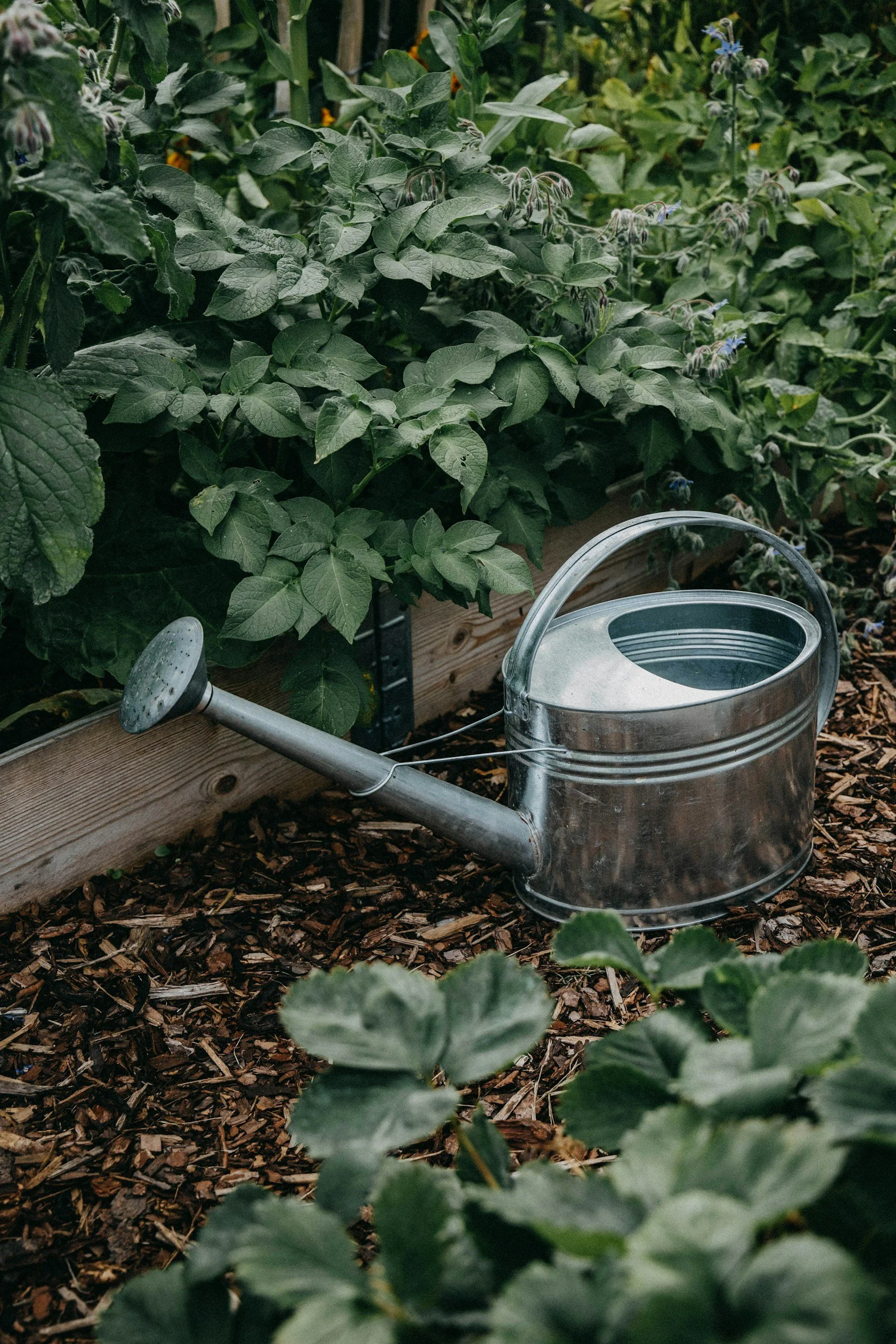
Water Deeply, Not Frequently
This is the shift that changes everything for most gardeners.
Most people water a little, often — a quick pass every day that keeps the top inch of soil damp. But shallow, frequent watering actually trains your plants to keep their roots near the surface, where they're most vulnerable to heat and drought stress.
What you want instead is deep, infrequent watering — soaking the soil thoroughly so moisture reaches down 6 to 8 inches, where roots can access it even when the surface dries out between waterings. This isn’t a tentative watering. This is a deep standing there with a hose for longer than you think is necessary or setting your irrigation to a long drip rate.
In practice, this looks like:
Watering less often — for most raised beds in summer, every 2-3 days rather than daily, depending on your soil mix and temperatures
Watering longer — slow, thorough watering that allows moisture to penetrate deeply rather than a quick splash on the surface
Checking before you water — always do the finger test first; if it's still moist below the surface, your plants are fine
Deep-rooted plants are drought-resilient plants. It's one of the most important investments you can make in your summer garden.
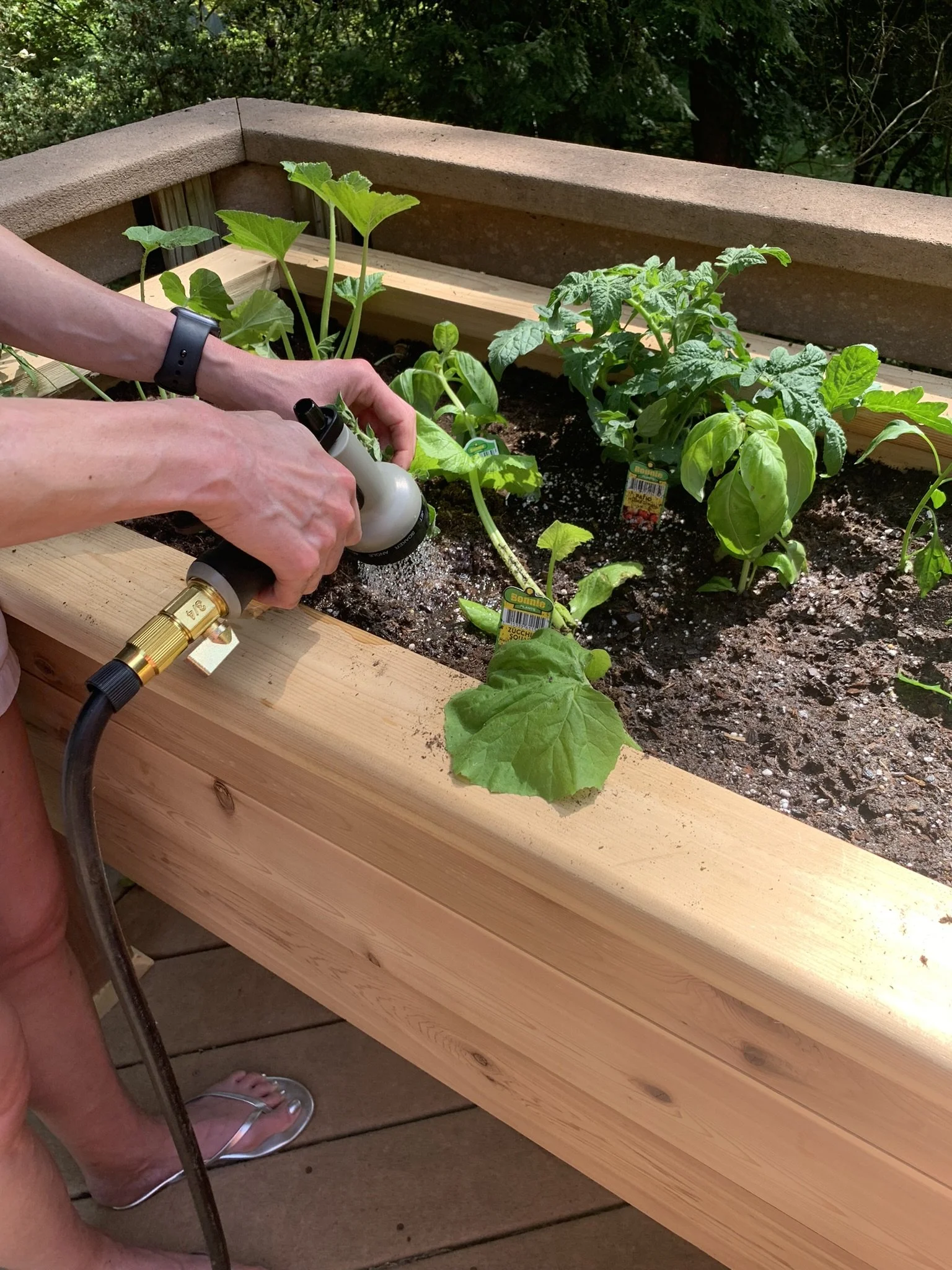
Direct the Water Where It Matters
In the summer heat, where water lands matters as much as when you water.
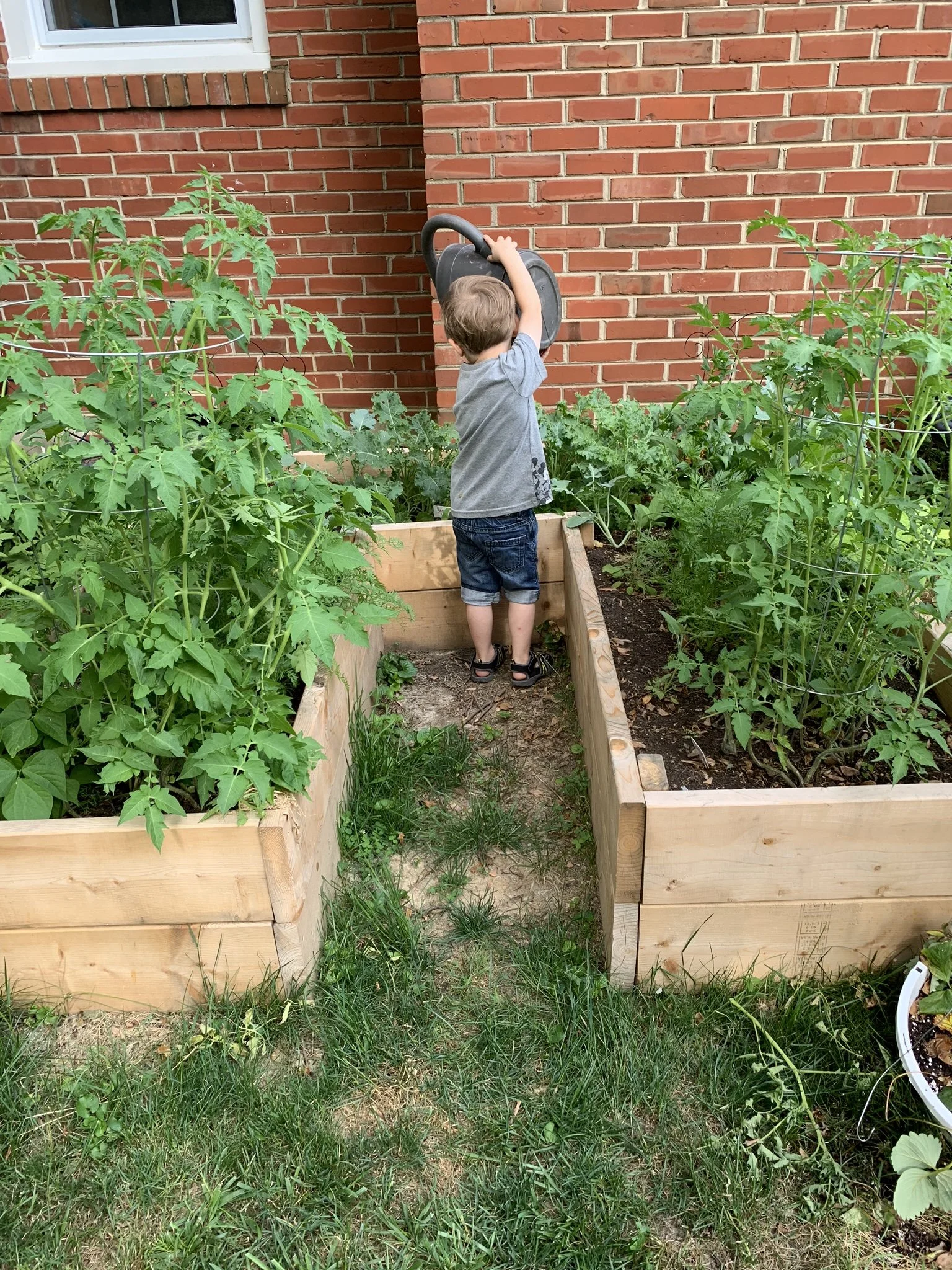
Water at the base of the plant, not from above. The roots are where the plant absorbs moisture — not the leaves. Overhead watering wastes water through evaporation and wets foliage unnecessarily. A soaker hose, drip irrigation, or a watering wand directed at the soil surface is always going to be more effective than a sprinkler or a watering can held high.
Focus on the root zone. For most vegetables in a raised bed, this means watering in a circle roughly six to twelve inches around the base of the plant. You don't need to soak the entire bed surface — just the area where the roots actually are.
Avoid wetting the leaves of plants prone to fungal disease — tomatoes, squash, and cucumbers especially. Wet foliage plus summer humidity is a recipe for powdery mildew, blight, and other fungal problems that are much easier to prevent than to treat.
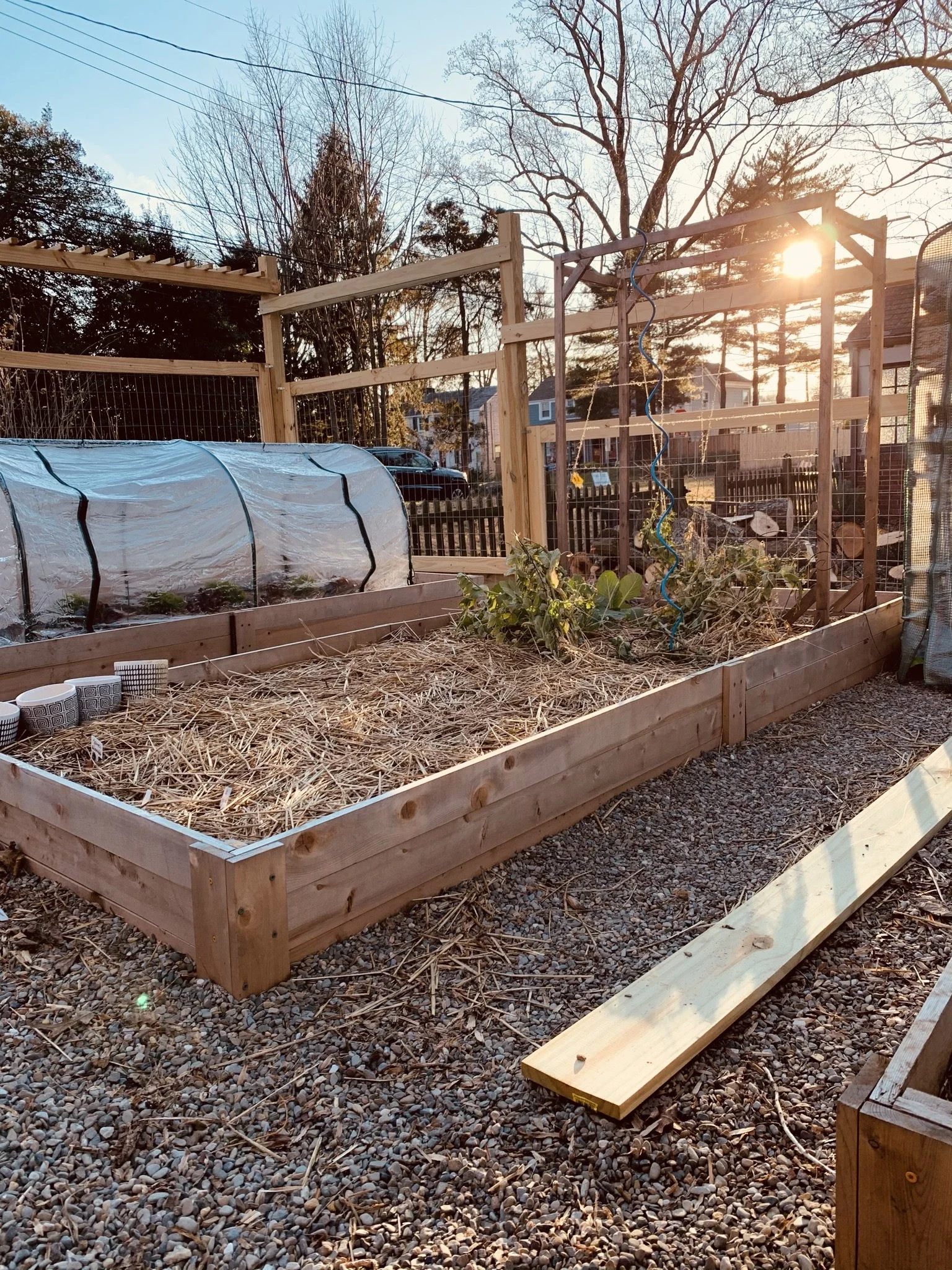
Mulch: Your Secret Weapon Against Evaporation
If you're not mulching your raised beds in summer, this is the single biggest change you can make to your watering efficiency.
I can’t stress this enough.
A two to three inch layer of straw, shredded leaves, or wood chips on the soil surface does several remarkable things at once: it dramatically slows evaporation, keeping soil moist longer between waterings; it regulates soil temperature, keeping roots cooler even when air temperatures soar; and it suppresses weeds that would otherwise compete with your plants for water.
Mulched beds can retain moisture up to 50% longer than bare soil — which means less watering, less stress on your plants, and more time for you to actually enjoy your garden instead of maintaining it.
Know the Signs of Real Water Stress
Not every wilting plant needs water — and in summer, this distinction is especially important.
Heat wilt is a normal, temporary response to high temperatures. Many plants — especially large-leaved ones like squash and cucumbers — will droop dramatically in the afternoon heat even when their soil moisture is perfectly adequate. They're conserving water by reducing their surface area exposed to the sun. Check on them in the early morning or evening — if they've perked back up, they're fine.
True water stress looks different: wilting that persists into the morning, leaves that curl inward or feel dry and papery, soil that is bone dry two inches down. This is when your plants genuinely need water — and they need it at the base, deeply and thoroughly.
Learning to tell the difference saves you from overwatering a plant that's just having a hot afternoon — which, as we know, creates its own set of problems.
A Smarter Summer Watering Routine
Put it all together and here's what a smart summer watering routine looks like for a Northern Virginia raised bed garden:
Water in the early morning or evening, before 9am or after 7 pm when possible
Check soil moisture first with the finger test before every watering
Water deeply and less frequently — aim for 6-8 inches of penetration rather than daily surface watering
Direct water to the root zone, not over the leaves
Mulch your beds to retain moisture and regulate soil temperature
Watch for heat wilt vs. true water stress and respond accordingly
My client made these changes mid-season. By August, her garden was lush, her water usage was down, and she'd stopped her afternoon watering ritual entirely — replacing it with an early morning garden walk that she said had become her favorite part of the day.
"I had no idea I was making it harder," she told me. "It felt like I was doing so much, and now I'm doing less and the garden is doing better."
That's the magic of working smarter, not harder. In the garden and in life.
Your garden can thrive in the heat. It just needs to be watered smarter.